2026-08-20 · David Ruiz
How Houston Humidity Affects Garage Door Springs And Cables
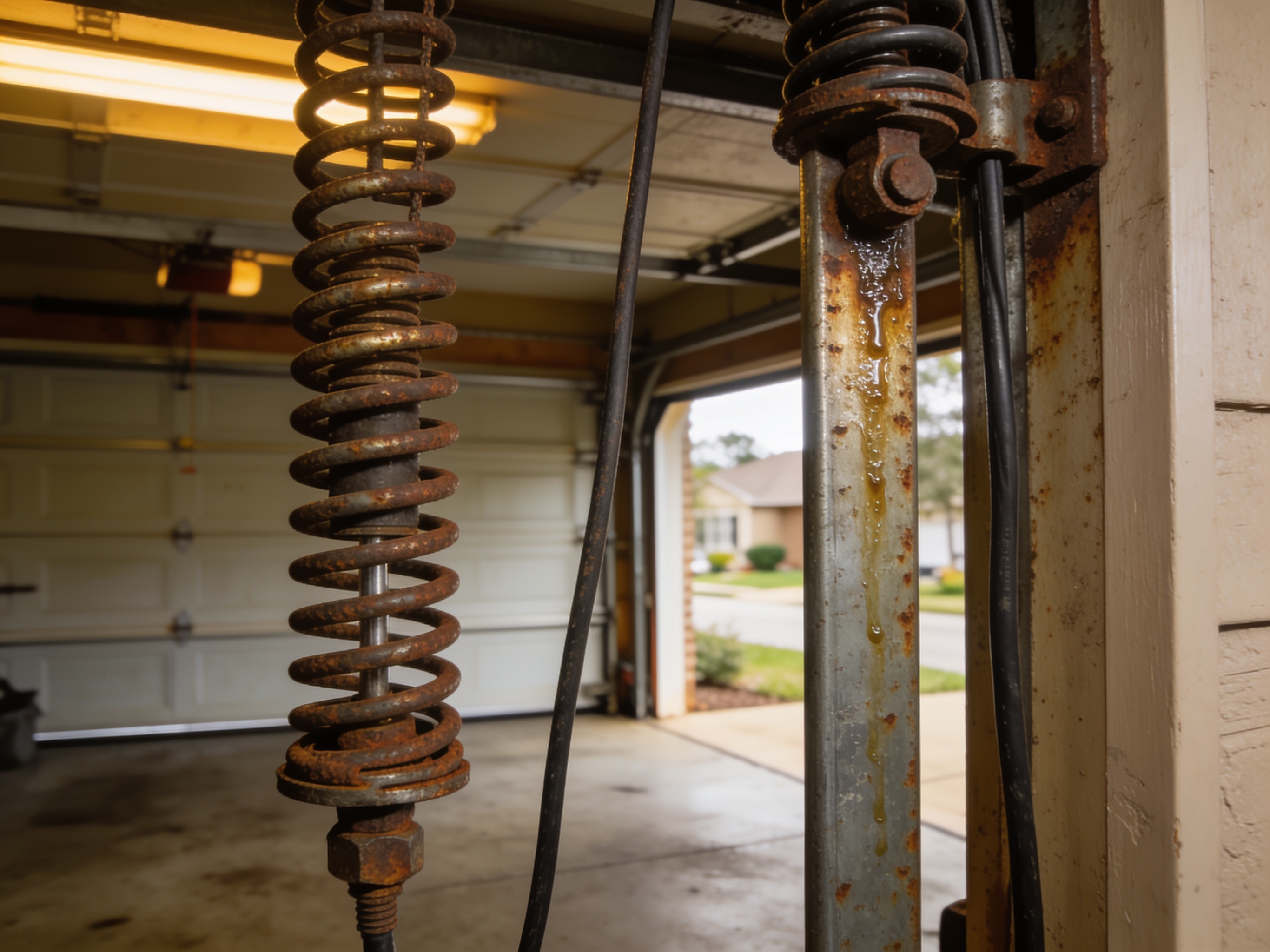
Houston humidity accelerates corrosion on garage door springs and cables, cutting typical lifespan to 5-8 years in many Harris County homes. Constant moisture from hot humid summers combines with mild winters to keep metal surfaces damp year-round, unlike areas with distinct dry seasons.
Humidity and Metal Corrosion Basics
Houston sits in a subtropical zone where summer dew points often stay above 70°F. This moisture settles on exposed torsion springs and lift cables inside garages. Over time the thin film of water mixes with dust from nearby construction in Midtown and River Oaks, creating an electrolyte that speeds oxidation. Springs made of high-carbon steel lose tensile strength first at the coils, while cables develop pitting along the strands. In neighborhoods like the Heights, older single-story homes with attached garages trap more humidity overnight because of limited airflow around mature trees.
Effects on Torsion Springs
Torsion springs bear the full weight of the door multiple times daily. In Pearland and Sugar Land, where summer humidity lingers, rust forms inside the spring coils within three to four years. The oxide layer increases friction, forcing the spring to work harder and heat up during operation. A spring that might last 10,000 cycles in a dry climate often reaches only 6,000-7,000 cycles before visible surface rust appears. Technicians routinely find broken springs on doors installed just five years earlier in Montrose because the constant moisture prevents the factory lubricant from lasting.
Effects on Lift Cables
Lift cables run over pulleys and stretch under load. Humidity causes individual wire strands to rust internally, creating weak points that snap without warning. In Downtown high-rises converted to lofts, cables exposed to salt air from the Gulf degrade even faster. A cable rated for 8-12 years of service frequently needs replacement after 4-6 years when installed on doors facing prevailing winds. The rust also flakes into the roller tracks, compounding wear on other moving parts.
Local Housing and Weather Patterns
Harris County contains thousands of homes built between 1950 and 1990 with 16-gauge steel doors and 7-foot torsion springs. These older doors were not designed for today's higher average humidity levels. Katy and Sugar Land subdivisions built on clay soils experience minor foundation movement that slightly misaligns tracks, allowing more humid air to reach the springs and cables. Mild winters mean residents rarely see the freeze-thaw cycles that would otherwise crack rust scale, so the corrosion layer simply thickens steadily.
Practical Inspection Steps
Check springs and cables every six months by shining a flashlight along the coils and strands. Look for orange-brown discoloration, white powdery residue, or small metal flakes on the floor beneath the door. Count the number of door cycles since the last service; most Houston doors average 1,200-1,500 cycles per year. If the door shows hesitation or a grinding noise at the top of travel, the cables may already have internal rust. Homeowners can compare photos taken six months apart to spot progression before a sudden break occurs.
For detailed spring replacement procedures see our garage door spring repair page. Similar humidity challenges appear in other Texas markets; read about conditions in Dallas, Texas. Regular lubrication with a silicone-free product rated for high-humidity environments helps slow the process on both springs and cables.